Gardeners Regents Park — Recycling and Sustainability
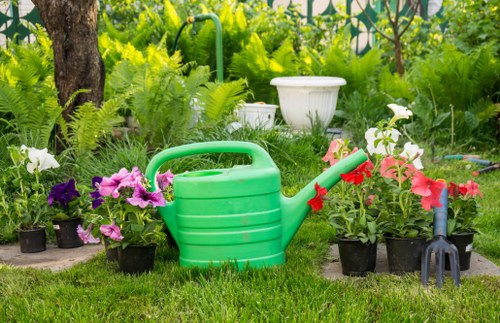 Welcome to the Gardeners Regents Park page on Recycling and Sustainability. Our aim is to create an eco-friendly waste disposal area and a thriving sustainable rubbish gardening area where every spade, seed packet and coffee cup is treated as a resource. This page outlines the park's recycling percentage target, connections to local transfer stations, partnerships with charities for reuse and redistribution, and our fleet transition to low-carbon vans.
Our approach blends practical on-site action with borough-aligned waste separation systems: households and site teams are encouraged to separate glass, paper, card, metal cans, garden waste and food waste where facilities allow. By aligning with the borough's approach to waste separation, Gardeners Regents Park ensures that site-level sorting complements municipal collection schemes and reduces contamination rates.
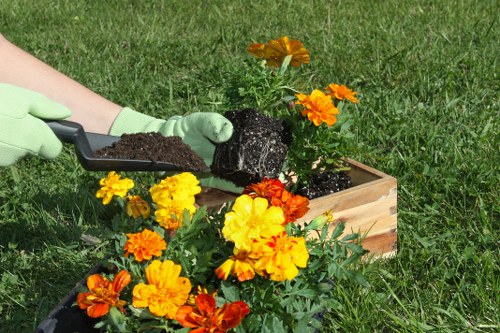 We commit to clear targets and measurable outcomes. The garden's recycling target is a 70% diversion from landfill by 2030 across all operational waste streams — a stretch goal that includes composting green waste, redistributing usable materials, and capturing recyclable packaging. To get there we monitor monthly tonnage metrics and contamination levels and publish progress to the park community.
Practical Eco-Friendly Waste Disposal Area
The on-site eco-friendly waste disposal area is purpose-built for gardeners and volunteers. Bins and bays are clearly labelled for: garden waste, compostable organics, mixed recycling and residual waste. We use visual signage and colour-coded containers to match the borough's kerbside separation rules so that material flows continue smoothly when transferred off-site. Where permitted, we run a small-scale in-vessel composting set-up for plant trimmings and a dedicated mulch station for woody prunings.
 A sustainable rubbish gardening area means designing for reuse: pallets turned into raised beds, old pots refurbished, and surplus soil redistributed rather than sent away. We prioritise material recovery on site and only send the strictly non-recyclable fraction to municipal handling. This reduces the carbon footprint of transport and disposal while creating a resource-rich park environment.
We also maintain a conservatively sized hazardous waste locker for old oils, batteries and pesticide containers, ensuring these leave the park to specialist handlers at approved transfer points rather than being mixed into general collections.
Local Transfer Stations and Borough Cooperation
To move materials efficiently we use local transfer stations that serve the borough, coordinating with municipal waste contractors to maintain the highest recycling yields. These facilities accept segregated loads of green waste, dry mixed recycling and food waste for onward processing. Working with the borough's transfer network shortens haul distances and reduces overall emissions from waste logistics.
Key operational steps include:
- Pre-sorting: separation on-site following borough guidance to prevent cross-contamination.
- Scheduled collections: timed transfers to local stations to avoid excess idling and reduce urban congestion.
- Documentation: weight tickets and recycling certificates to track diversion rates against our 70% target.
These measures are compatible with the broader urban waste strategy that encourages boroughs to treat compostable organics, glass, and paper as distinct streams wherever infrastructure exists.
Partnerships with charities are central to our reuse ethos. We work with local and national organisations — including community-focused environmental groups and plant reuse charities — to redistribute flowers, excess plants, tools and usable materials. This extends the lifecycle of items that would otherwise enter the waste stream and supports social value in the neighbourhood.
 Typical charity and reuse activities include tool refurbishment for community gardening projects, seed and plant swaps, and donating serviceable pots and furniture to social programmes. These relationships turn potentially wasted goods into community assets and reduce the demand for new resources.
 Transport is a major source of emissions in park operations, so we are transitioning to a fleet of low-carbon vans. The fleet strategy focuses on electric and plug-in hybrid cargo vans, ULEZ-compliant vehicles, and route optimisation software to minimise miles driven. Our maintenance yard is being fitted with dedicated electric vehicle charging points powered, where possible, by on-site solar or renewable tariff supply.
Behaviour and Education are as important as infrastructure. We run short training for staff and volunteers on proper sorting, contamination avoidance, and composting best practice. Clear, repeated messaging helps sustain the high recycling rates we aim for and cultivates a culture where sustainable rubbish gardening area practices become second nature.
To summarise our core commitments: maintain an eco-friendly waste disposal area aligned with borough separation rules; achieve a 70% recycling and reuse target by 2030; partner with charities for reuse; and operate low-carbon vans to reduce transport emissions. Together these measures make Gardeners Regents Park a model for urban green-space sustainability and practical waste stewardship.
We invite all gardeners, volunteers and park users to take part by sorting responsibly, opting for reuse where possible, and supporting the park's transition to a low-carbon, circular approach to garden waste and materials.

